Checked out some amazing graffiti in St. Peters on Saturday afternoon. Found it whilst looking for new and interesting places to photograph. Thanks to Rachael Muller for the wonderful guide, Click here for more information on Rachael’s guide.
Just about every wall, fence or garage door has been covered in graffiti. I was lucky enough to find an artist at work. Here are a sample of them. Please enjoy.
Graffiti Artworks
The graffiti artwork were just amazing. I highly recommend that you go and check them out.
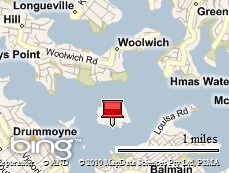
This is my first visit to Cockatoo Island. I caught a ferry from Circular Quay which took about 10 minutes. It was packed full of visitors. It was an extremely hot and humid day. The only respite was in the tunnels, dug into the sandstone cliffs, which were about 10C cooler.
You need more than a couple of days to fully appreciate this place. You can also camp overnight on Cockatoo Island. I am seriously considering doing this next visit so that I can do some night photography here.
After more than 3 hours of non-stop trudging all over the island and sweating copious amounts of bodily fluids. I was hot and dehydrated so I decided it was time to take a break and replenish. I ended up drinking a large bottle of PowerAde, a small bottle of water and 2 x cans of “real” Coke. Did I mention that I was thirsty? Note to self, come back in Autumn when the humidity is low.
HDR (High Dynamic Range)
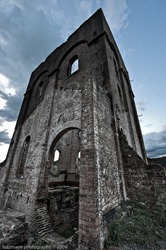
All of the above HDR shots were taken using a tripod, tone-mapped using Photomatix Pro with some tweaking in LR 2.6. Some of the internal shots were blended and burnt using CS4 and then tweaked in LR 2.6.
The external HDR shots consisted of 3 exposures (+1, 0, -1) and the internal HDR shots consisted of 5 separate exposures (-2, -1, 0, +1, +2).
All the shots above were taken with my Nikon D700 and 14-24mm f/2.8.
With the internal HDR shots I wanted to convey a sense of decay and abandonment. A dark and moody ambiance. I think I managed to achieve that with last two photographs.
History
Cockatoo Island is the largest island in Sydney Harbour. Cockatoo Island is a former imperial prison, industrial school, reformatory and gaol. It is also the site of one of Australia's biggest shipyards during the twentieth century. The first of its two dry docks was built by convicts and was completed in 1857.
The island's maritime industrial activity ceased in 1992.
Today Cockatoo Island retains many remnants of its past. Its prison buildings have been nominated for World Heritage listing, along with other convict sites around Australia. Large workshops, slipways, wharves, residences and other buildings retain the texture of the island's industrial past.
Decided to check out the blast furnace after reading about it in a photography knoll. Looked rather interesting. Left about 3:30 pm in the afternoon for a leisurely 2 hour drive to Lithgow. Get there just in time for a dusk/night shoot.
Drove around Lithgow for a Cafe for a quick dinner and some coffee but just about everything was shut. Hmm, I saw a sign for Maccas on the way into Lithgow but we couldn’t find it. I stopped and asked a local cab driver for directions. He said that it was about 10 mins down the road on the way out of town.
The cappuccino was horrendous, it was bitter and tasted really odd. I heard the guys on the next table whinging that it was the worst coffee ever. At least the quarter pounder was okay but the fries were yucky!
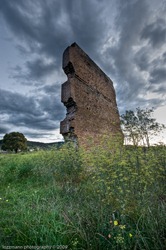
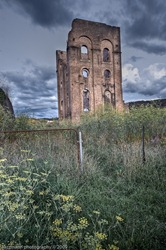
The Blast Furnace
Blast Furnace Park is a monument to Lithgow's industrial history. It was here that the first iron and steel were cast in Australia. William Sandford established the blast furnace in 1886 and it continued production until 1928 when the entire industry was move to Port Kembla.
All the above are HDR shots. Each shot consist of 3 separate exposures (-1, 0, +1). Tripod used, tone-mapped using Photomatix Pro and tweaked in LR 2.6.
All these shots were taken at around 20:00 hrs. I was eaten alive by mossies but it was worth it.
Here are a couple of non-HDR shots. The sun suddenly appeared from behind the clouds. I really liked how the reflected sunlight gave both the building and wall a warm golden glow.
I was looking for something new to photograph outside of Sydney. I found
, after about an hour surfing, Cathedral Rocks at Jones Beach, Kiama, a small seaside town about a 2 hours drive south of Sydney.
Here are some of the shots from my shoot last Thursday. I hope that you will enjoy them.
This HDR shot consist of 5 separate exposures (-2, -1, 0, +1, +2). Tripod used, tone mapped using Photomatix Pro and tweaked in LR 2.6.
This HDR shot consist of 5 separate exposures (-2, -1, 0, +1, +2). Tripod used, tone mapped using Photomatix Pro and tweaked in LR 2.6.
This HDR shot consist of 3 separate exposures (-1, 0, +1). Tripod used, tone mapped using Photomatix Pro and tweaked in LR 2.6.
This HDR shot consist of 5 separate exposures (-2, -1, 0, +1, +2). Tripod used, tone mapped using Photomatix Pro and tweaked in LR 2.6.
ISO 200 | f/8 | 1/200
This is a non HDR shot. It was taken with my Sigma 70-200mm. I love the texture and details on the rock face. It may not be the sharpest lens around but I am pretty happy with it.
ISO 200 | f/16 | 30 secs
This was taken a few minutes just before the sunset. I love the glassiness of the water with the reflections of the rocks. I also love the bluish tones. For some inexplicable reason I did not do a HDR version.
ISO 200 | f/11 | 240 secs
I had to wait unit the sun was completely down for this shot. It was about 21:00 hrs (9pm). The mosquitoes were out in force. I use my LED head torch to light paint just the face of the two rocks to highlight them.
This 180° HDR Panorama consist of 8 separate panels, shot in portrait mode. Each panel contains 3 exposures (-1, 0 +1), tripod, tone mapped using Photomatix Pro, stitched together in CS4 and tweaked in LR 2.6.
This is my second trip up to Mt. Tomah. Seems like every time I decided to come here it rains. Looking on the bright side there will lots of water drops on the flowers and plants.
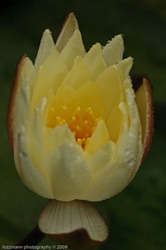
I got some really cool macro shots. The majority of them were shot at 1:1, hand-held of course . I used my home-made macro flash rig which consists of 2 x SB-800s.
ISO 500 f/16 1/800 secs Flash
ISO 500 f/16 1/80 secs Flash
ISO 500 f/16 1/200 secs Flash
ISO 500 f/16 1/125 secs Flash
ISO 500 f/16 1/200 secs Flash ISO 200 f/16 1/200 secs Flash
ISO 500 f/16 1/80 secs Flash
ISO 500 f/16 1/160 secs Flash
The macro rig, both Nikon SB-800s, the Nikon 105 macro lens and D700 was totally wet from the constant drizzle. Happily, I like to report that everything is still working.